
 English
Views: 80 Author: Site Editor Publish Time: 2025-12-19 Origin: Site
Commercial beer brewing is a carefully controlled industrial process that combines engineering, chemistry, and brewing expertise. From raw materials to finished packaged beer, every stage must be precisely managed to ensure product consistency, safety, and flavor stability.
At DEGONG, we design and supply professional brewing equipment for commercial breweries worldwide. This guide explains the standard commercial beer brewing process, helping brewery owners, operators, and investors understand how beer is produced on an industrial scale.
Commercial beer brewing follows a structured workflow designed for efficiency, repeatability, and hygiene. While recipes and beer styles may vary, the core production stages remain consistent across most breweries:
Raw material preparation
Wort production
Fermentation and maturation
Filtration and packaging
Modern commercial breweries rely on stainless-steel vessels, automated control systems, and strict sanitation standards to maintain high production quality.

Commercial beer is brewed using four essential ingredients:
Water
The primary component of beer, influencing extraction efficiency and mouthfeel.
Malted Grains
Typically malted barley, providing fermentable sugars, enzymes, and color.
Hops
Added for bitterness, aroma, and natural preservation properties.
Yeast
A living microorganism that converts sugars into alcohol and carbon dioxide.
Ingredient quality and consistency are critical for large-scale production.

Malting prepares barley for brewing by activating enzymes needed for starch conversion. The process includes steeping, controlled germination, and drying. Malting defines the potential sugar profile and color of the final beer.
The malted grains are crushed to expose starches while keeping husks relatively intact. Proper milling improves extraction efficiency during mashing and supports effective filtration later in the process.
Crushed malt is mixed with hot water in a mash vessel. Enzymes convert starches into fermentable sugars, forming a sweet liquid known as wort. Temperature control during mashing directly affects sugar composition and beer body.
During lautering, the wort is separated from spent grains. The liquid wort is collected while the grain bed acts as a natural filter, ensuring clarity and maximum sugar recovery.
The wort is transferred to a boiling kettle, where it is boiled for a set period. This stage:
Sterilizes the wort
Extracts bitterness and aroma from hops
Stabilizes proteins
Concentrates the wort
Hop addition timing plays a major role in defining beer flavor and aroma.
After boiling, the wort must be cooled rapidly to fermentation temperature. Fast cooling reduces contamination risks and prepares the wort for yeast addition.
Cooled wort is transferred into stainless-steel fermentation tanks equipped with temperature control and pressure management.
Yeast is added to initiate fermentation
Sugars are converted into alcohol and CO₂
Fermentation conditions vary by beer style
At DEGONG, fermentation tanks are engineered to ensure precise temperature control, hygiene, and consistent fermentation performance.
After primary fermentation, beer undergoes conditioning to allow flavors to stabilize and unwanted by-products to settle. This stage improves clarity, taste balance, and carbonation quality.
Before packaging, beer may be filtered or clarified to improve appearance and shelf stability. Final products are then packaged into:
Bottles
Cans
Kegs
Proper packaging preserves freshness and protects beer quality during storage and transport.
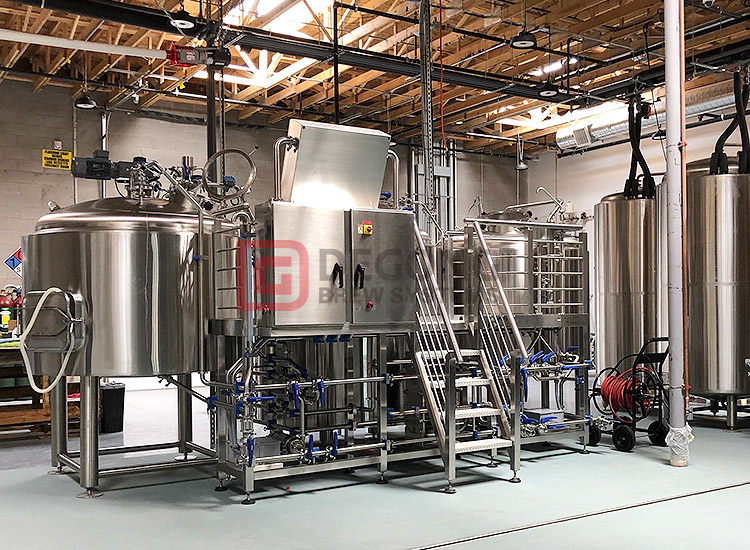
Commercial breweries depend on professional brewing equipment, including:
Mash tuns and lauter tuns
Brew kettles and whirlpools
Heat exchangers
Fermentation and bright beer tanks
CIP cleaning systems
DEGONG supplies complete brewery systems designed for scalability, reliability, and compliance with food-grade standards.
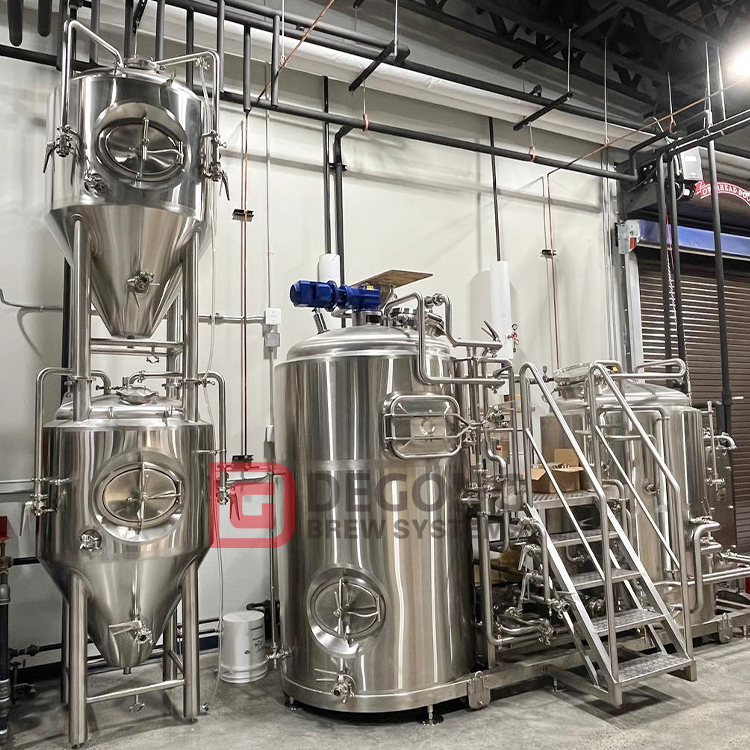
Sanitation is critical in commercial brewing. Closed systems, CIP cleaning, and stainless-steel construction help prevent contamination and ensure consistent product quality. Every tank, pipeline, and valve must be cleaned and monitored regularly.
Commercial beer brewing transforms basic ingredients into a refined beverage through a series of precisely controlled industrial processes. From malting to packaging, every stage plays a vital role in flavor development, efficiency, and product safety.
At DEGONG, we support breweries with reliable brewing equipment and technical expertise to help achieve stable production, consistent quality, and long-term operational success.
