
 English
Views: 23 Author: Site Editor Publish Time: 2025-08-12 Origin: Site
Polished surfaces reduce microscopic pits and cracks.
Bacteria and microorganisms are less likely to attach to smooth surfaces.
They facilitate thorough cleaning and disinfection.
They meet food-grade production standards.
Rough surfaces may cause beer to absorb metal ions.
This can affect the flavor and taste of beer.
They also reduce oxidation.
Polishing removes surface stress concentration points.
Improves corrosion resistance.
Extends equipment life.

The most common food-grade stainless steel.
Good corrosion resistance.
Affordable.
Higher corrosion resistance.
Particularly suitable for highly acidic environments.
Commonly used in high-end brewing equipment.

Higher strength and corrosion resistance.
Suitable for high-pressure and high-temperature environments.

Surface treatment using abrasive materials
Can achieve a surface roughness of Ra ≤ 0.8μm
Relatively low cost
Electrochemically removes surface material
Can achieve a mirror finish (Ra ≤ 0.1μm)
Improves corrosion resistance
Used for equipment components with special requirements
Surface roughness can reach Ra ≤ 0.05μm
Higher cost
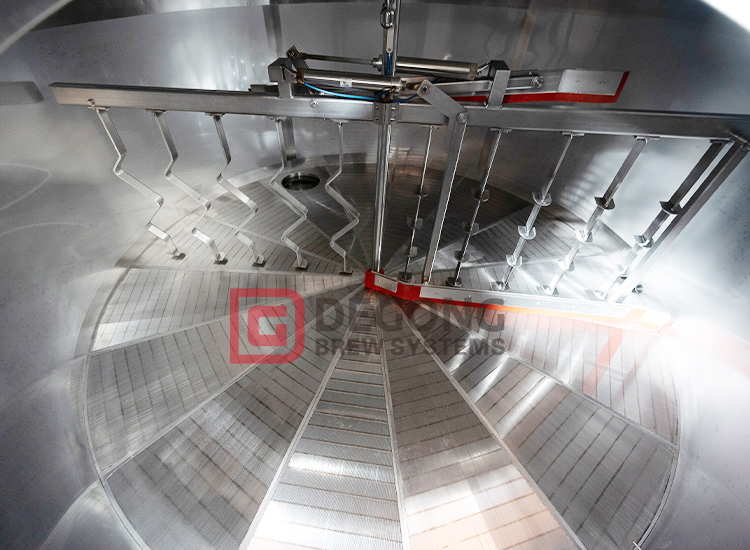
Contact Surface Ra ≤ 0.8μm.
Non-Contact Surface Ra ≤ 1.6μm.
All internal corners must be smoothly rounded.
Avoid cleaning of dead corners.
Weld seams must be polished flat.
Achieve a smooth transition to the base material.
