
 English
Views: 40 Author: Site Editor Publish Time: 2025-10-16 Origin: Site
Brewing is one of humanity’s oldest technologies, with roots stretching back thousands of years. Over time, the tools and techniques used to make beer have undergone dramatic transformation: from primitive vessels and natural fermentation to today’s advanced, intelligent brewing systems. These technological advances not only enhance efficiency and quality but also help drive the global craft beer movement forward.
In ancient times, brewing equipment was extremely simple:
Pottery jars were used to ferment mixtures of water, grains, and wild yeast. These vessels had limited capabilities in terms of sealing and temperature control.
Over time, wooden barrels became popular for both fermentation and storage. Their slight permeability brought subtle flavor contributions, albeit with significant challenges in sanitation and consistency.
At this stage, temperature control, hygiene, and yeast management were almost entirely dependent on ambient conditions and the brewer’s intuition.
As metalworking advanced, brewing started to adopt metal pots (iron, copper) to replace pottery and wood:
Metal utensils improved heating efficiency, durability, and ease of cleaning.
Small-scale breweries (such as those in monasteries) began formalizing brewing processes.
Yet, fermentation was still largely natural, with ambient temperature swings and wild yeast dominating the process.
Although this era introduced some process standardization, brewing remained an art heavily reliant on experience and environmental influences.
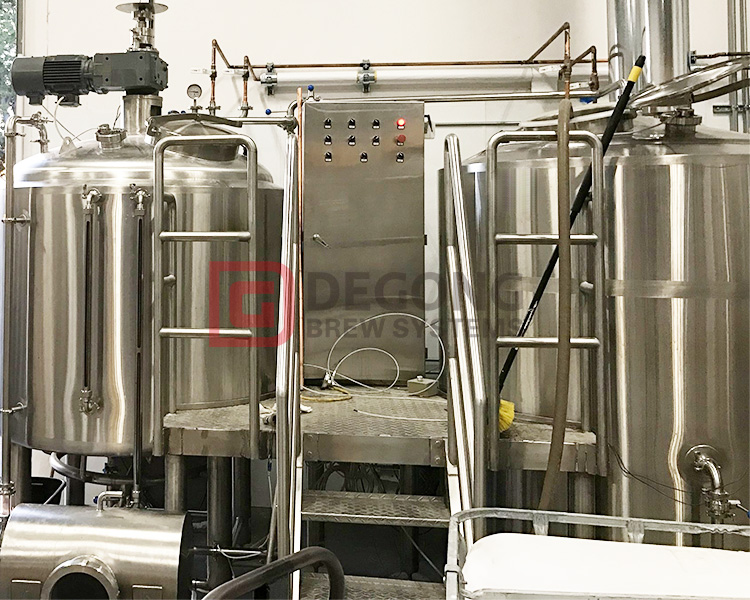
The industrial era ushered in key breakthroughs:
Steam power began driving pumps, agitators, and heating systems, enabling larger brewing volumes and faster throughput.
Fermentation vessels transitioned from wood to steel and aluminum, increasing durability and hygiene.
Advancements in microbiology allowed brewers to isolate and cultivate pure yeast strains, reducing reliance on wild yeast and improving consistency.
These changes laid the foundation for the modern brewing industry by merging mechanical power, sanitation, and scientific control.
The 20th century saw rapid adoption of electrical and process control technologies:
Temperature regulation systems (thermostats, controllers) enabled brewers to precisely manage mash, boil, and fermentation steps.
Automated brewing equipment began to handle tasks such as heating, cooling, agitation, and yeast pitching with minimal manual intervention.
Pressure fermentation and accelerated fermentation techniques shortened fermentation cycles and enabled novel beer styles.
Filtration, membrane separation, and microbial controls became standard tools for clarifying wort and securing product stability.
These innovations brought beer production closer to industrial standards of repeatability, hygiene, and scale.
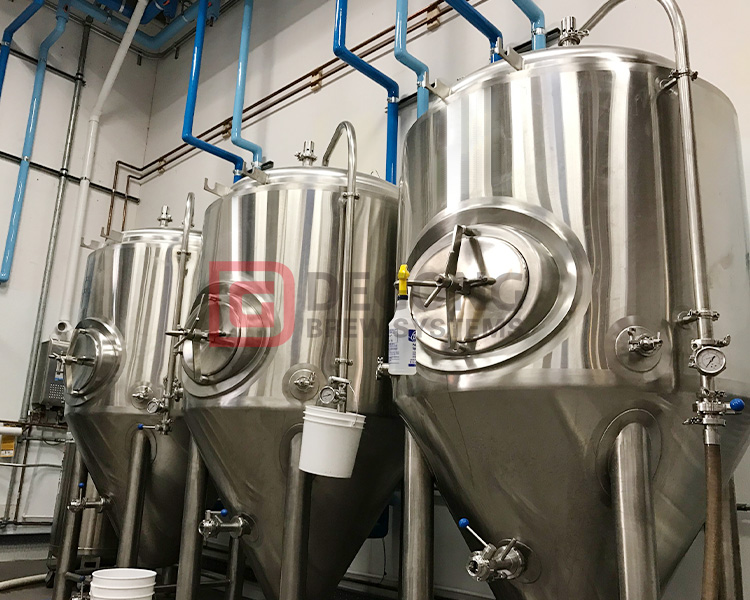
Today’s brewing equipment is increasingly smart, data-driven, and customizable:
Modern systems are equipped with sensors to monitor temperature, pH, gravity, dissolved oxygen, and fermentation trends in real time. Users can control processes remotely via software or mobile apps.
From grain milling and mashing to boiling, hop addition, cooling, and fermentation, many home and microbrew systems can now operate with minimal manual intervention, thanks to automation.
The rise of craft brewing demands equipment that is scalable, modular, and configurable. Brewers often customize the number of vessels, heat sources, agitation, and process loops.
Industrial systems leverage big data, cloud analytics, and feedback loops to continually optimize ingredient usage, yield, energy efficiency, and quality control.

As brewing technology has advanced, DEGONG has positioned itself as a forward-looking brand specializing in next-generation brewery equipment. Here’s how DEGONG aligns with the evolution:
Bridging tradition and innovation. DEGONG designs systems that preserve core brewing fundamentals (mashing, boiling, fermentation) while embedding modern control and modularity.
Scalable platforms. DEGONG offers equipment lines for home, micro, and commercial-scale breweries. Each line can be scaled or upgraded modularly.
Smart control. DEGONG systems integrate sensors, PLC/PC control, and remote monitoring to manage temperature, flow, pressure, and process metrics seamlessly.
Customization and flexibility. DEGONG equipment supports modular ports and interfaces (for CIP, filtration, nutrient dosing, etc.), allowing brewers to optimize processes.
Data-driven optimization. Through built-in data acquisition and feedback systems, DEGONG helps brewers refine recipes, reduce waste, and improve consistency.
In short, DEGONG aims to be a partner in the ongoing evolution of brewing — delivering equipment that is efficient, precise, adaptable, and aligned with modern craft brewing needs.
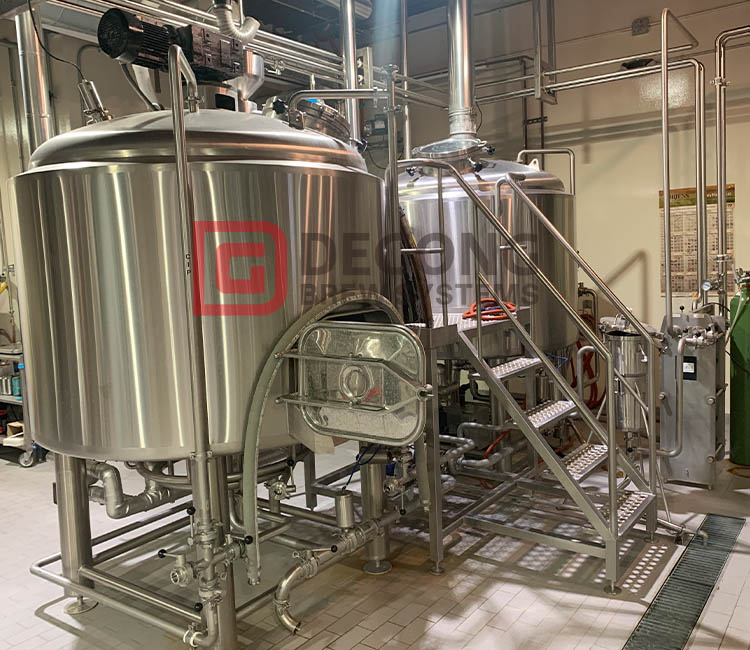
Looking forward, brewing equipment is likely to evolve in these directions:
AI-assisted brewing: Use of machine learning models to predict fermentation trajectories, flavor outcomes, and process adjustments.
IoT & cloud integration: Breweries will become more networked, enabling remote control, alerts, and predictive maintenance.
Sustainability & energy recovery: Heat recovery, water reuse, and renewable energy integration will become more widespread.
Micro- & nano-breweries: Ultra-compact systems that rival commercial quality at small scale will expand the home and starter brewery market.
Material innovation: Novel materials (advanced alloys, coatings, composites) may reduce weight, improve heat transfer, and simplify cleaning.
With these trends, DEGONG is well positioned to continue leading in smart, adaptive brewing solutions that honor brewing heritage while embracing technology.
