
 English
Views: 32 Author: Site Editor Publish Time: 2025-07-23 Origin: Site
Whole-grain brewing is a traditional brewing process that uses crushed malt (rather than malt extract) to convert starch in grains into fermentable sugars through saccharification. Its core advantages are:
Flavor control: You can freely adjust the types of malt (such as caramel malt, wheat malt) to create a unique taste.
Process purity: No extracts are added throughout the process, which is in line with the "starting from scratch" concept of craft beer.
Mashing: After the malt is crushed, it is mixed with hot water (148-158°F) to activate amylase to break down starch.
Filtration and washing of grains: Separate the wort and wash the grain residue with 170°F hot water to maximize the extraction of sugar.
Boiling and fermentation: The wort is boiled and sterilized and hops are added. After cooling, it is put into yeast fermentation.

Dimensions | Whole grain brewing | Extract brewing |
Raw material costs | Lower (direct malt purchase) | Higher (dependence on pre-made extracts) |
Equipment requirements
| Requires professional equipment such as mash tuns and filtration systems
| Only basic boiling and fermentation tools are required |
Time investment
| 5-6 hours (including mashing) | 2-3 hours (skipping mashing) |
Flavor potential | Precise control of malt flavor profile | Limited by extract recipe |
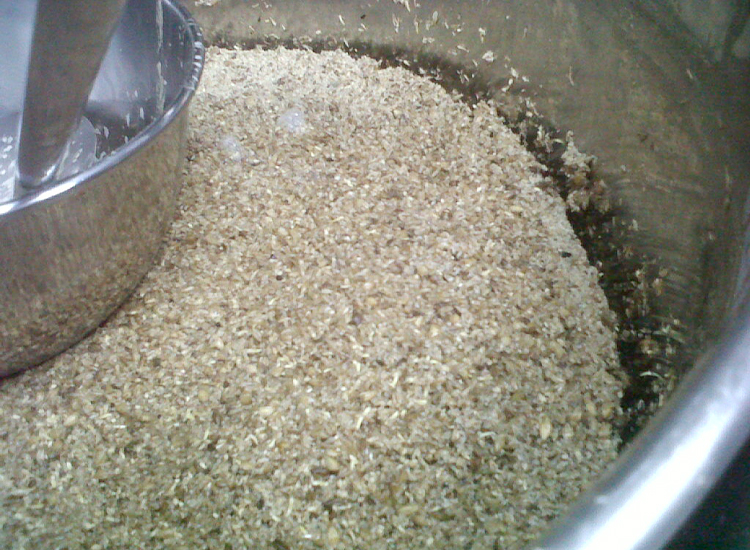
Beating water is the water used to soak the grains during the mashing process. You need to "beat" the mash with the first batch of water to ensure that the mash is beaten at the right temperature. The water temperature is critical and the mash temperature should be between 148 and 158 degrees Fahrenheit (about 64 to 75 degrees Celsius). It is recommended that the brewing water temperature is higher, between 158 and 169 degrees Fahrenheit (about 75 to 80 degrees Celsius). The recommended mashing temperature is 152 degrees Fahrenheit (about 73 degrees Celsius), so heat the fermentation water to 163 degrees Fahrenheit (about 74 degrees Celsius).
The wort or lauter tun is at the optimal temperature so that the temperature of the wort does not drop when it is placed in the lauter tun. When preparing the lauter tun, you need to pour the fermented water into the lauter tun and keep it at that temperature for 5 minutes.

Mash making is the process of adding ground grains or wheat flour to the mash tun. Mixing is essential to keep the mash temperature even and prevent the grains from clumping.
Waiting is crucial because in this step, the mash converts complex carbohydrates and starches into simple sugars.
Sparging is the process of spraying hot liquid onto the wort to flush out residual sugars. You want to flush as much sugar out of the grain as possible. To start continuous sparging, open the valve on the wort/lauter trough and let the wort begin to drip into the lauter trough. If your lauter trough is not above the lauter trough, you can let the wort flow into the lauter trough first and then pour the wort into the lauter trough. It will take about 60-90 minutes to collect the full amount at the rate at which the wort is collected.
Once you have collected enough wort, stop sparging. Now you can cook the wort just like you would for extract. The only difference is that the full amount needs to be boiled.
After the malt fermentation and mashing steps are complete, the brewing process is the same for whole grain and extract. You need to boil the wort and finally ferment it to make beer. To avoid losing sleep over your whole-grain experiment, we recommend putting in a few extra hours when brewing your beer.

Besides the main equipment for home brewing all-grain beer, here are some other items that can help you with the brewing process:
Grain mill for crushing grains
Water and mash thermometers
Wort chiller to cool the wort to the yeast feeding temperature
Mashing paddle
Hydrometer for checking gravity
Pitcher used to perform forward thrust
Scales for weighing grain and hops
Pumps and hoses for value transfer between ships
Fermentation tanks

Home brewing equipment is as varied as home breweries, but these are just the minimum requirements for all-grain brewing. If you are already a veteran beer brewer, all-grain brewing is another way to show your creativity and have more control over the brewing process. I hope you find this guide helpful!