
 English
Views: 22 Author: Site Editor Publish Time: 2025-09-08 Origin: Site
Starting a nanobrewery is an important decision. A nanobrewery is a small brewery that produces limited-edition craft beers. These breweries typically focus on unique craft beers and serve a local market. However, many aspiring homebrewers may wonder: Can a nanobrewery producing small batches of beer be profitable?
A nanobrewery is smaller than a microbrewery and refers to a brewery or craft beer bar with an annual production capacity of less than 15,000 barrels. Annual production caps for nanobrewery are more stringent than for other breweries.
A New Hampshire law limits nanobrewery production to 2,000 barrels per year, but not every state has such laws.
Nanobreweries have lower operating costs and focus on brewing unique, experimental beers. Some companies use single-barrel brewing systems. A nanobrewery may not be able to brew enough beer to sustain itself. However, it can be used to turn your home brewing hobby into a small business. Creating a nanobrewery is certainly the first step towards a commercial brewery.

Developing a business plan is a crucial first step in starting a nanobrewery. If you're considering opening a nanobrewery, there are several things to keep in mind.
Determine your brewing goals
Conduct market research
Choose a brewery size
Develop a relevant business plan
Understand local legal requirements and permits
Purchase the necessary nanobrewery equipment

To start your nanobrewery, you'll need a variety of equipment to brew and package your beer. Essential brewing equipment includes:
Brew kettle: Used to boil wort, the liquid extracted during the mashing process.
Wort tun: A container used to mix crushed grains with hot water to extract fermentable sugars.
Fermenter: A container where the wort and yeast mix and ferment, converting the sugars into alcohol.
Heat source: A burner or electric heating element used to heat the brew kettle.
Cooling system: A wort chiller used to cool the boiled wort before transferring it to the fermenter.
Sanitizing and cleaning equipment: Necessary for maintaining hygiene and preventing contamination.
Measuring and testing tools: A hydrometer, thermometer, and pH meter used to monitor the brewing process.
Bottling or kegging equipment: Used to package the finished beer.
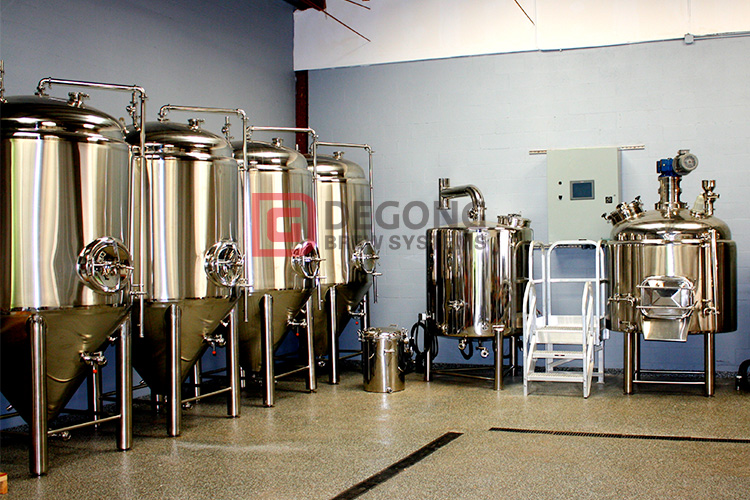
The advantage of nanobrewing is that it requires minimal capital to open or franchise in a local market. Unlike other craft breweries, which require equipment and expertise in specific beer types, commercial companies do require equipment. For those planning to start this type of business, as well as entrepreneurs who share a passion for craft beer, this offers the opportunity to not only generate profit for your hobby but also incorporate your own innovations into the product.
When you open a nanobrewery, you can operate as a sole proprietor, meaning you are the owner and have full control over all aspects of the business. This offers a great deal of flexibility and a significant benefit, as you receive full profit from the company's profits. This eliminates the need for a large staff, making management more manageable.
The disadvantage of a small business is its slim profit margins. While you can experiment with innovation, profits are limited. Furthermore, due to a limited workforce, you're limited in the products you can sell.
Competitors are common for small businesses like these. Some have already reached their break-even point. However, since they're already operating and likely profitable, they're more likely to acquire customers. Furthermore, some businesses may choose to reduce their workforce to reduce wage costs. Consequently, a larger workforce produces fewer products.

Nano refers to one billionth, smaller than a micron. Nanobreweries are smaller than microbreweries. Nanobreweries are limited to producing a certain amount of beer before scaling up to microbreweries.
Nanobreweries don't have any particular advantages over microbreweries, but there are reasons why people might want to start one. First, nanobreweries are typically run by one person, who handles all operations.
Compared to nanobreweries, microbreweries offer both scale and production capacity. Microbreweries' scale implies a one-in-a-million probability. Microbreweries are limited to producing no more than 15,000 barrels per year. Microbreweries can produce only 465,000 gallons of beer. Microbreweries have a wider reach and can even distribute beer on demand.

Nanobreweries target a smaller, more localized (often regional) customer base. They prioritize connectivity over mass distribution. This makes them highly successful venues for tours and tastings.
Some breweries can be profitable using nanobrewing systems with capacities under 300 liters. It all depends on your break-even analysis. You need to ensure your revenue covers or exceeds your fixed and variable costs. This is the cost-to-profit comparison! When developing your business plan, you need to calculate the total revenue you need to achieve over a specific period to ensure you meet or exceed your projected costs.
Nanobreweries can still employ a number of strategies to achieve profitability. One approach is to focus on selling beer to customers through bars or tasting rooms. This eliminates the need for expensive and time-consuming distribution to bars and restaurants. Another approach is to develop a strong brand image and attract a loyal following through social media and marketing campaigns.