
 English
Views: 34 Author: Site Editor Publish Time: 2025-11-03 Origin: Site
Beer fermentation tanks are vital to every brewery — their service life directly affects beer quality, production cost, and operational efficiency. Over time, exposure to yeast, CO₂, and cleaning chemicals can cause corrosion, contamination, and surface wear.
In this article, DEGONG, a leading brewery equipment manufacturer, shares practical tips for extending the service life of beer fermentation tanks — focusing on material selection, cleaning & disinfection, routine maintenance, temperature & pressure control, and more.
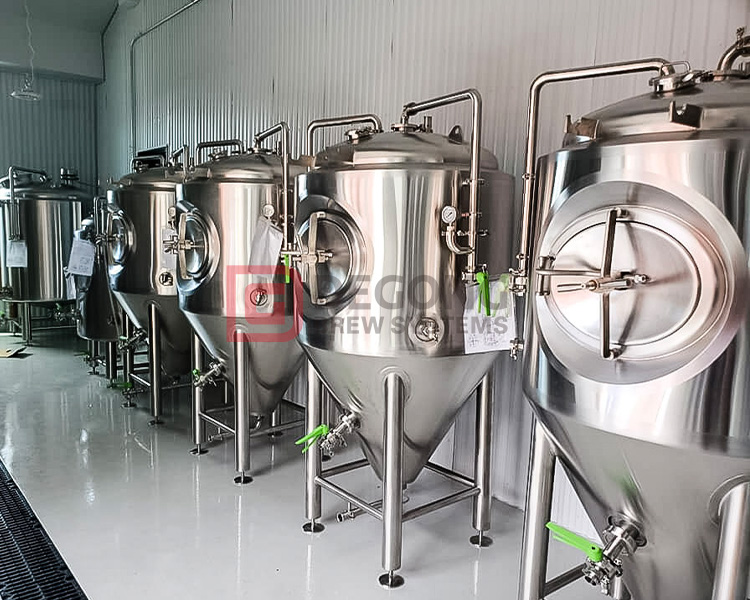
DEGONG fermentation tanks are made from high-grade stainless steel such as 304 or 316L. The corrosion resistance and welding quality of these materials directly determine durability. Proper polishing and passivation ensure a smooth surface that prevents bacterial growth and corrosion.
A fermentation tank’s working conditions—humidity, ambient temperature, and pressure—strongly influence its lifespan. High humidity and poor ventilation accelerate corrosion, while excessive usage frequency may lead to metal fatigue and valve wear.
Improper cleaning is a major cause of premature tank damage. Overly strong acidic or alkaline cleaning agents can corrode stainless steel surfaces, while incomplete rinsing leaves residues that affect fermentation quality and encourage bacterial contamination.

Choosing tanks with thermal insulation, precise cooling jackets, and ergonomic design improves fermentation stability and energy efficiency.
Insulation reduces temperature fluctuation and cooling load.
Multi-zone cooling jackets enable accurate temperature control.
Smooth inner walls and sloped bottoms facilitate complete drainage and easy cleaning.
Modern DEGONG fermenters can integrate real-time sensors for pH, temperature, pressure, and dissolved oxygen, helping brewers maintain stable conditions and consistent beer quality.
Healthy yeast ensures stable fermentation. Proper yeast collection, storage (1-4 °C), and automatic dosing systems help maintain yeast vitality, reduce production cost, and ensure batch consistency.
Compact or modular fermentation systems are ideal for breweries with limited space. Vertical, high-aspect-ratio tanks enhance fermentation efficiency per unit floor area and simplify future expansion.
Regular cleaning & disinfection: Clean thoroughly after each batch using proper cleaning agents (e.g. mild acid and alkali). Avoid aggressive chemicals.
Control temperature: Maintain fermentation temperature in a stable range (typically 18-22 °C) to reduce thermal stress.
Avoid shocks: Prevent vibrations and impacts during installation or operation that could cause cracks or micro-leaks.
Inspect components: Regularly check valves, seals, gaskets, and cooling jackets for leaks or corrosion. Replace worn parts promptly.
Monitor pressure: Keep pressure within design limits and use safety valves to avoid over-pressurisation.

Q1: How often should fermentation tanks be cleaned?
Clean thoroughly after every fermentation cycle. In continuous production, deep clean at least once per week.
Q2: How can temperature be controlled effectively?
Use glycol-cooled jackets with automatic control valves and temperature sensors to keep fermentation conditions stable.
Q3: What’s the best way to prevent corrosion?
Use CIP (Clean-in-Place) systems, rinse completely after chemical cleaning, and perform regular passivation maintenance.
Q4: How can I detect tank leakage early?
Check for pressure loss or moisture marks around welds and valves. Use pressure-holding tests periodically to ensure sealing performance.

Investing in a high-quality fermentation tank is only the first step — proper maintenance and operation determine how long it will serve your brewery. By following the above methods and adopting professional design, cleaning, and monitoring systems, you can greatly extend the tank’s service life and ensure consistent beer quality.
DEGONG offers turnkey brewery solutions — from brewhouses and fermentation systems to CIP units and glycol cooling systems — helping breweries worldwide achieve stable, efficient, and high-quality production.
Contact DEGONG for customised brewing equipment solutions that match your capacity and budget.
