
 English
Views: 26 Author: Site Editor Publish Time: 2025-08-05 Origin: Site
When brewing beer, there are two types of malt extract: dry malt extract and liquid malt extract. Both are made from whole-grain mash, but after a boiling process at the manufacturer's facility.
This concentrated wort is in powder form and completely evaporated through a spray-drying process, removing virtually all water. It lacks enzymatic properties and cannot be used for mashing, but it can be used as the base malt for any beer. One pound of dry malt extract dissolved in one gallon of water is equivalent to 1.045 starting gravity (SG). DME comes in various flavors, including pale, pilsner, amber, dark, Bavarian wheat, and beige.
Concentrated, unfermented wort in a thick, syrupy form. It resembles dark maple syrup and has a consistency similar to honey. LME is approximately 20% water, with the remaining 80% consisting of sugars and unfermentable solids, which are essential for beer brewing. One pound of LME dissolved in one gallon of water yields 1.035 grams of raw wort. LME comes in many varieties, including pilsner, extra pale ale, pale ale, sea otter, Bavarian wheat beer, Munich wheat beer, dark rye beer, dark rye beer, and sorghum beer.

If an extraction-based brewer hopes to create high-quality beer, they should understand the ins and outs of their system and how they affect their brewing. You can brew an extracted version of a beer brewed with all-grain, or extract a clone of your favorite beer. Taste your beer side by side with an all-grain or commercial beer, noting every difference as much as possible. How do color, bitterness, malt character, and yeast quality stack up? Once you have this information, use the following tips to correct or adjust any issues you may encounter.
The biggest improvement most wort brewers can make to their craft is to boil more wort. Early homebrewing books instructed brewers to boil 5 gallons (19 liters) of wort in 1.5 gallons (5.7 liters) of water. While convenient, this convenience comes at a price. Boiling thick wort will undoubtedly darken its color and limit the bitterness of the hops. Regardless of the recipe's call for volume, always boil the largest amount of wort you can manage.
The amount of boil isn't the only factor that can cause wort to darken. Another issue is that dissolved malt extract can caramelize. When malt extract is stirred into hot water, it doesn't dissolve immediately. Even if everything appears to be dissolved, small "droplets" of extract can remain untouched for quite a while. These "droplets" sink to the bottom of the brew kettle, where they caramelize. Therefore, each time you stir the extract, turn off the heat, stir until no undissolved extract is visible, and then stir again for another minute or so.
Two other factors that contribute to wort darkening are temperature and time. The longer the wort is boiled, the darker the color.
Whether using extract or whole grain, this should always be your primary consideration. While malt extract is more processed than grain, it's also more susceptible to rancidity. Due to its higher moisture content, liquid malt extract will begin to go rancid within a few months and will gradually darken. Dry malt extract remains active longer, but it also deteriorates over time. When choosing your ingredients, ensure they match your chosen beer style.
Whole grains can take advantage of the additional qualities they bring to beer. The maceration process imparts color, body, and flavor to the beer. I recommend always using a light malt extract as a base, then adding specialty grains for depth. Don't rely on dark extracts.
Specialty grains like crystal, black lacquer, chocolate, and coffee can add color, texture, and complexity to your rich coffee.
Ignore the boil volume given in the extract recipe. You need to boil as much wort as possible. You should boil the entire wort, plus approximately 6-8% for evaporation. Therefore, for a 5-gallon batch, the ideal pre-boil volume is at least 5.5 gallons.
A smaller boil volume results in a higher gravity boil, which reduces hop usage and increases the potential for color pickup and caramelization.
Another major difference between all-grain brewing and extract brewing is that all-malt wort brewed with grains is almost always easier to ferment than all-malt wort brewed with extracts. Early beer brewing kits addressed this issue by mixing malt extract with fermentable sugars to produce dry beer.
Boiling at a lower wort concentration helps reduce the bitterness of extract beer. However, extract brewers should also strive to maximize hop utilization.
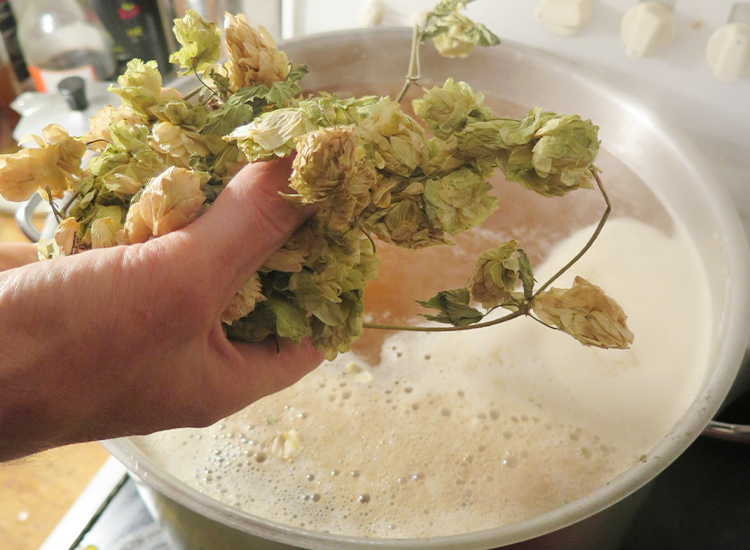
While boiling with bagged hops is convenient, this reduces the amount of bittering compounds (alpha acids) extracted from the hops. Add bulk hops to the brewing kettle. After the wort cools, let it sit for half an hour. This will allow the granular sludge to settle to the bottom of the kettle, allowing the clear wort to be siphoned out. Also, during the boiling process, knock off any remaining hop particles adhering to the walls of the hop kettle.

Warm wort contains far more calories than you might realize, and the dilution water you add to dilute it to 5 gallons (19 liters) isn't cooling it nearly as effectively as you might think. Purchasing a wort chiller is the best solution, but many beginners avoid this equipment at first.
Another excellent solution is to cool the wort in a tank or keg. Replacing the cooling water every five minutes absorbs the heat from the wort. During this time, hop residue and other sediment may settle to the bottom of the tank. When the tank is cool to the touch (i.e., below body temperature), siphon the wort into the fermenter and add the dilution water.
Mal extract is a concentrate of wort, containing all of its components, including dissolved minerals. Any minerals in the dilution water will increase the (unknown) mineral content of the extract. Unless there is a compelling reason not to, always use soft water (even distilled water) to brew malt extract. In some cases, adding a small amount of calcium to the boiling water can be beneficial. However, if you attempt to create "Burton's Water" by adding salt to the brewing water, you will end up with "Burton's Plus" water due to the minerals already present in the malt extract. Malt extract engineers recommend using activated carbon to filter city water.
Once the wort is made, yeast turns it into beer.
To brew the best beer, yeast requires three conditions: sufficient yeast growth, a stable fermentation temperature, and adequate aeration.
The first condition is something most extract brewers can improve. This can be achieved by creating a sourdough starter or by harvesting yeast from a previous fermentation and adding it to the fermenter. The second condition can be achieved using the cooling and glycol systems mentioned above. The third condition can usually be met.

The biggest advantage of extraction brewing is that it's simple, quick, and doesn't require much specialized equipment. Improving the flavor of your craft beer doesn't mean spending more time brewing or buying a ton of new equipment. If you follow the tips in this article, you're guaranteed to brew a better-tasting craft beer.