
 English
Views: 25 Author: Site Editor Publish Time: 2025-08-28 Origin: Site
A pilot brewery is a smaller system, typically located within a main brewery. Therefore, a pilot brewery produces smaller batches of beer than a larger system. The size of a pilot system is often determined by the size of the main brewery.
A pilot brewing system is a secondary system used by a brewery. Compared to a main system, pilot brewing systems are smaller in scale. These systems have less automated brewing and require more labor.
The purpose of a pilot brewing system is to produce small batches of beer to supplement its main brewery, typically to test new recipes and create new beers.

The time and effort required to brew small and large batches of beer are roughly the same. Therefore, if you already have a primary brewing system, setting up a pilot system might seem pointless. There are two main reasons: risk and sales.
Experimental beers are often produced using a pilot brewing system. This approach minimizes the financial risk if the beer doesn't taste good and the production volume is small.
Even if the beer is good, it doesn't necessarily mean there will be a high demand for that flavor. Therefore, small-scale beer production is suitable for limited production volumes. As you can see, limited production volumes and higher risks are not suitable for large-scale brewing systems.
A pilot brewing system is crucial for every brewery, regardless of size. As breweries grow, they often require more brewing capacity than their existing system can handle. In these cases, breweries can no longer afford to waste time brewing experimental beers on their primary system.
However, breweries with a brand new system may find that the additional brewing capacity is too risky for testing new recipes. So, in both cases, these breweries needed to test new recipes without disrupting their normal brewing schedules, and they wanted options to mitigate the risk if the new beer didn’t meet their taste or quality standards.

The size of a pilot brewing system is relative to the main brewing system. Some pilot brewing systems are as small as a home brewing system, while others are larger than other breweries' main brewing systems.
The challenge lies in balancing a system that produces enough beer for the brewery to sell while also delivering a high-quality product.
The brewery's goals must also be considered. Those who want to test new recipes often choose to produce small batches. Other breweries use their pilot brewing systems to produce special beers. These products must be of extremely high quality, but production volumes are limited.

No matter how small your brewery is, it's essential to have a pilot system. Make sure it can accommodate two kegs of final beer. This can be the smallest keg you fill, such as two 20-liter kegs.
This is recommended so that if your bar has excess beer, you can add beer and receive real-time feedback. Having two kegs means more people will try it, and the feedback you receive will be more useful.
Also, if it's a new beer, it's worth investing in two kegs to give people time to visit and try the new brew.

Performing a pilot brewing test on your brewing system is crucial. First, it allows brewers to try new beer recipes without having to brew on a large scale. This means brewers can test the quality of their beer before committing to full-scale production, saving time and money in the long run.
Second, a pilot brewing system allows brewers to test the quality of their ingredients before brewing on a large scale. This means brewers can identify any potential issues with their ingredients before they develop, ensuring consistent beer quality.
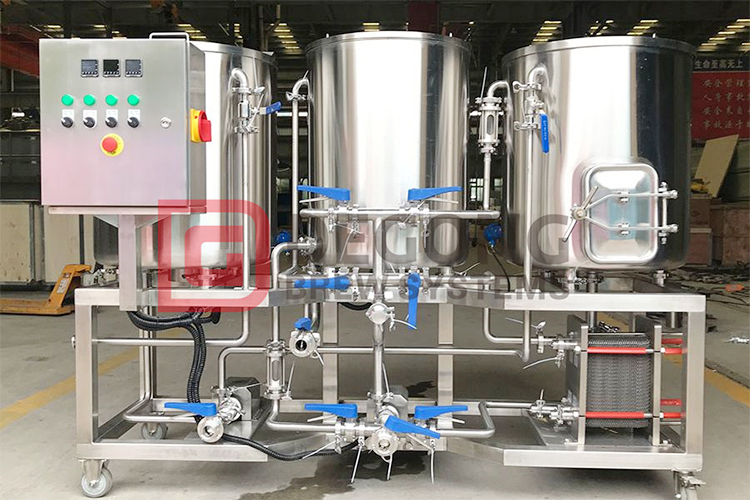
Improved Quality Control: A pilot brewing system allows brewers to monitor the brewing process and make adjustments as needed. By brewing beer in small batches, brewers can identify issues with ingredients or process ahead of time. This ensures consistent beer quality and meets high standards.
Cost Savings: Brewers can save money by using a pilot brewing system. By testing beer on a small scale, they can identify and address issues before going into full production. This helps them avoid costly mistakes and produce high-quality beer that meets customer expectations.
Creative Experimentation: A pilot brewing system gives brewers the opportunity to try new recipes and processes. By experimenting with different ingredients and brewing methods, brewers can create unique and interesting beers that attract new customers.
