
 English
Views: 19 Author: Site Editor Publish Time: 2025-08-18 Origin: Site
Hop creep refers to the increased fermentation in dry-hopped hops, triggered by the amylolytic enzymes in the hops. These enzymes break down unfermentable dextrins into short-chain oligosaccharides such as maltotriose, maltose, and glucose. While yeast cannot process the long-chain dextrins, it is able to ferment glucose and maltose.
During secondary fermentation, the remaining yeast cells in the new beer convert these sugars into alcohol, carbon dioxide, and secondary metabolites—undesirable fermentation intermediates. The term "hop creep" was coined by American craft brewers because it is a subtle and slow process that can lead to unpleasant surprises for brewers. This phenomenon is currently the subject of research.

While different hop varieties behave differently in soluble starch solutions, they also vary in actual dry-hopping trials. A 2018 article published in the Journal of the American Society of Brewing Chemists explains that, while the theory remains unproven, hop genetics do appear to influence their activity, with Amarillo® and Cascade having a greater impact on alcohol and strength than other varieties. The same is true for Simcoe®, Centennial®, and Citra®. This means that the maturity (not age) of the plant or cone, growing conditions, and handling and processing during and after harvest all influence each variety's hop creep activity.
Hop creep refers to the re-fermentation of leftover dry hops in beer through other means. During dry hopping fermentation, hop-associated enzymes begin breaking down unfermentable dextrins left over from the primary fermentation. Remaining yeast in the finished beer metabolizes these released sugars, producing alcohol and carbon dioxide.
Active yeast metabolizes new fermentable sugars, producing more alcohol. Excessive alcohol can affect the flavor of the beer. Out-of-season beer may be discarded.
Active yeast metabolizes new fermentable sugars and produces more carbon dioxide. Excess carbon dioxide in packaged beer can lead to overcarbonation. Furthermore, the increased pressure can cause the container to rupture.
Active yeast secretes acetolactate during fermentation, which is then oxidized to form diacetyl compounds. This can cause the beer to taste like butter or butterscotch. Generally, diacetyl is considered a defect in most beer styles, especially at higher levels.

Before we jump into how to control hop creep, let's first discuss some of the factors that influence hop creep. To reiterate the obvious, hop creep only occurs after dry hopping has been added to the beer. Many of the dry-hopping factors that affect flavor and aroma also affect hop creep:
Time: The longer the hops are mixed with the beer, the more their enzymes can break down any dextrins left over from the primary fermentation.
Temperature: Generally speaking, higher temperatures increase yeast fermentation activity. High temperatures can also induce unhealthy yeast cells to re-enter the fermentation.
Amount of hops: The more hops, the more enzymes are available to break down dextrins.
Hop processing: Before hops are delivered to the brewery, they are dehydrated, or "dried." This process prevents them from deteriorating during delivery and storage. Hop producers heat the hops. If heated to a high enough temperature and for the correct amount of time, most enzymes that cause hop creep will be denatured.
Hop variety: Due to differences in oil content and composition, enzyme activity varies from hop variety to hop variety
Beer Itself: Dry hopping beers with a lot of residual sugars will allow the hops to produce more fermentable sugars from the hop vines over time.
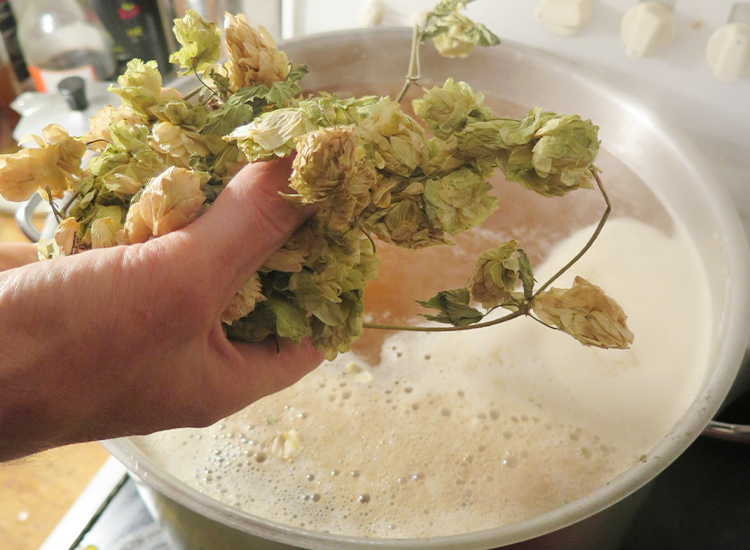
CO2 extracts and cryogenic pellets are less likely to cause hop creep. Whole bulb hops are more likely to cause hop creep because the enzyme is believed to be present in the green matter of the hops, which is more common in whole bulb hops.
Shorter dry hopping times can reduce the effects and likelihood of hop creep.
Maintaining a dry hopping temperature of 50°F (10°C) or lower is recommended to reduce or prevent hop creep. Higher dry hopping temperatures may promote its occurrence.

A lower dry hop dosage (less than 2 pounds per barrel, or approximately 6.5 g/L) is recommended to reduce hop creep. Excessive dry hopping may increase the risk and severity of hop creep.
Hop creep only occurs when active yeast is present in the beer suspension—the more yeast in the suspension, the greater the likelihood of hop creep when dry hops are added.
Hop creep can be prevented by removing yeast from the beer before packaging. While this may not be possible in home brewing, the presence of hops is necessary for some commercial beers, such as hazy beers.
