
 English
Views: 74 Author: Site Editor Publish Time: 2025-08-27 Origin: Site
The fermenter must be at least 20% larger than the amount of beer you plan to brew.
Reason: During fermentation, a thick layer called Clausen head forms (occupying approximately 20% of the volume).
Example: 5 gallons of beer require a 6-6.5 gallon fermenter.
Primary fermenter: Requires an additional 20% of space to accommodate the Clausen head.
Secondary fermenter: Should be filled as full as possible to minimize air contact (5 gallons of beer in a 5-gallon tank).
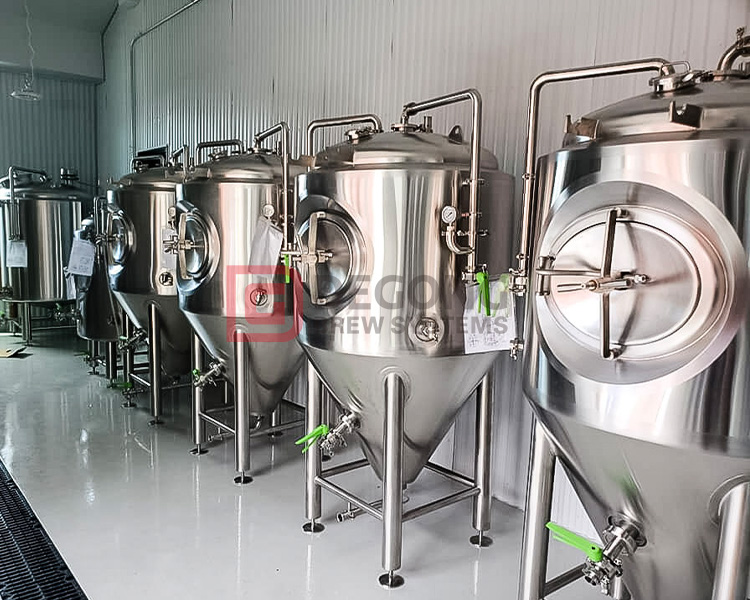
Open Fermentation Tank:
The most basic type without a lid or seal.
Mainly used for wine fermentation, it facilitates manual capping.
Closed Fermentation Tank:
It has a sealed lid to prevent contaminants from entering.
Preferred for beer brewing, it prevents oxidation and odors.
Variable Capacity Fermentation Tank:
It has a floating lid and an adjustable capacity.
It is suitable for home brewing and small-scale brewing, minimizing air contact.

Plastic Buckets:
Pros: Inexpensive, lightweight, easy to store (1-8 gallons)
Cons: Poor sealability, potential for oxygen leakage
Glass Bottles:
Pros: Durable, completely oxygen-tight (0.5-15 gallons)
Cons: Heavy, difficult to store, often lacking a tap
Stainless Steel Fermentation Tanks:
Pros: Scratch-resistant, easy to clean, completely sealed
Professional Choice: Conical design facilitates sediment removal and yeast recovery

Conical tanks allow primary and secondary fermentation to be completed in the same vessel.
This eliminates the risk of contamination during transfer.
Easy to collect, clean, and reuse yeast.
This improves brewing efficiency and consistency.
Tall, conical stainless steel tanks are commonly used by professional breweries.
A wide range of sizes are available to meet varying production needs.

Fermentation Beverage Type: Beer, wine, and other fermentation tanks have different requirements.
Experience Level: Beginners can start with plastic barrels.
Available Space: Consider storage and operating space.
Budget Range: Prices vary significantly from plastic to stainless steel.
Required Capacity: Choose the appropriate size based on production volume.
Selecting the right fermentation tank type and size can significantly improve fermentation quality, avoid foaming and oxidation issues, and lay the foundation for brewing high-quality beer.
