
 English
Views: 24 Author: Site Editor Publish Time: 2025-10-21 Origin: Site
As the kombucha market continues to expand globally, stability, consistency, and process automation have become essential for successful production. Traditional small-batch or manual methods often lead to unstable fermentation, uneven carbonation, contamination risk, and inconsistent flavor profiles.
To overcome these challenges, more producers are turning to automated kombucha brewing systems — and DEGONG offers advanced solutions that help transform small-scale brewing into reliable, commercial-grade production.
A kombucha brewing system is a fully integrated, automated fermentation setup designed to simplify production, enhance product consistency, and scale output.
Typical configurations include stainless-steel fermenters, temperature-control systems, digital monitoring interfaces, sanitary outlet valves, thermowells, and airtight sealing systems. These features ensure precise control from the first fermentation stage through carbonation and flavoring.
Compared with traditional plastic or glass fermenters, automated stainless-steel systems are more durable, hygienic, and suitable for commercial operations. With DEGONG’s kombucha systems, producers can confidently scale from pilot batches to full-scale production without compromising quality.
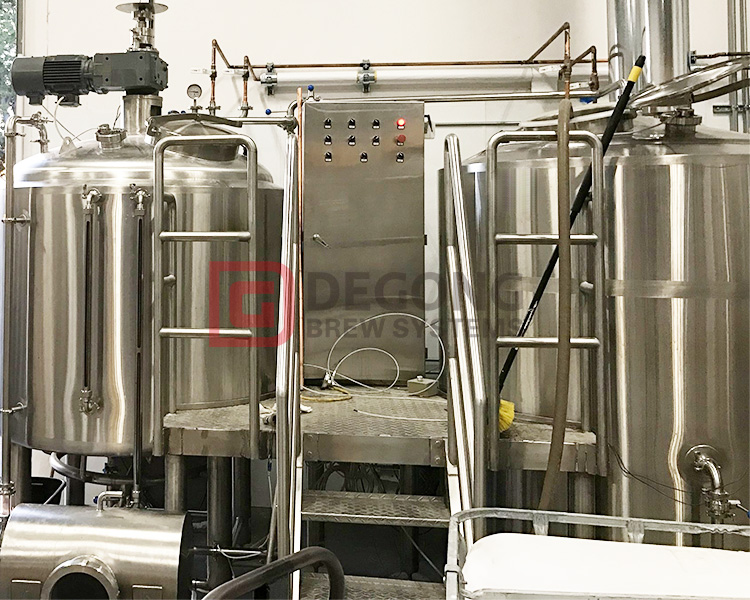
Temperature stability is a critical factor in kombucha fermentation. The optimal range (24 °C – 29 °C / 75 °F – 85 °F) ensures ideal activity of the SCOBY (Symbiotic Culture of Bacteria and Yeast). Deviation from this range may slow fermentation, alter flavor, or increase contamination risk.
DEGONG brewing systems feature cooling jackets or electrical heating elements with precise digital controllers to maintain optimal fermentation temperatures. This guarantees consistent product quality and a stable flavor profile for every batch.
Scaling up from home brewing to commercial production requires professional-grade equipment. Key components include:
Food-grade stainless-steel fermentation tanks – durable, sanitary, and corrosion-resistant.
Thermowells – for accurate temperature sensing.
Sanitary outlet valves – for easy and clean transfer.
Cooling jackets – for efficient temperature regulation.
pH monitoring systems – to maintain product safety.
Airlocks or sealed lids – to prevent contamination.
Bottling and carbonation systems – for controlled secondary fermentation.
These elements ensure food safety, reduce contamination risks, and improve overall production efficiency — all core strengths of DEGONG’s engineered systems.
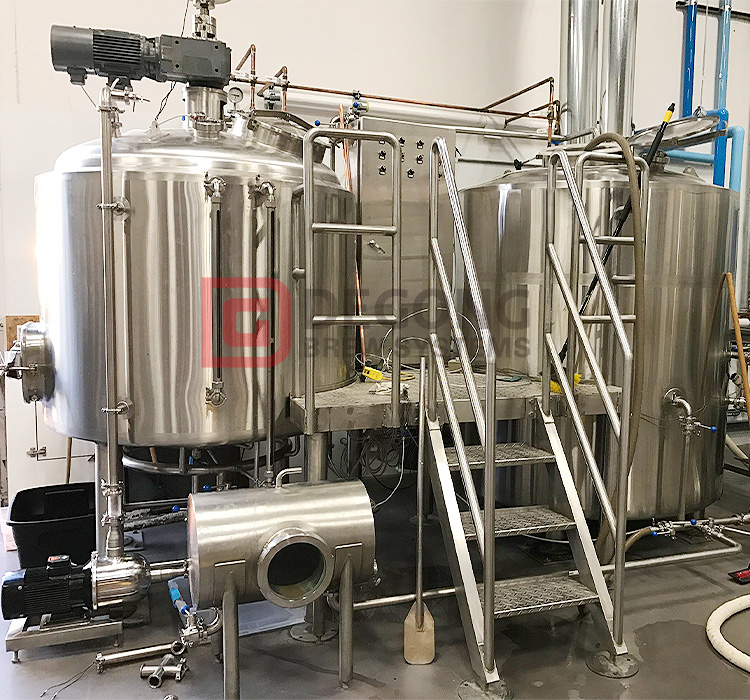
Compared to plastic or glass, stainless-steel fermenters provide superior hygiene, durability, and temperature stability. They are easy to clean and maintain, preventing oxygen intrusion and microbial growth.
DEGONG’s kombucha fermenters are built from food-grade 304 or 316 stainless steel and can integrate directly with temperature-control and CIP systems. This ensures consistent fermentation conditions for high-quality, probiotic-rich beverages.
Continuous fermentation is an advanced brewing method where part of the kombucha is drawn off regularly while fresh sweet tea is added.
With continuous-fermentation systems, producers benefit from:
Improved flavor consistency
Shorter downtime between batches
Reduced contamination risks
Ideal conditions for large-scale or franchise operations

After the initial fermentation, secondary fermentation introduces carbonation and natural flavor infusion. Professional equipment ensures controlled CO₂ levels, precise sugar management, and consistent flavor outcomes.
DEGONG’s systems support seamless transition from fermentation to carbonation and bottling — allowing producers to manage flavor, pressure, and carbonation automatically and safely.
The kombucha industry is entering a new era of digitalization. Many modern systems now include IoT connectivity, remote monitoring, data logging, and automated control of temperature, pressure, and cleaning cycles.
DEGONG kombucha brewing systems integrate these smart technologies, reducing manual labor, minimizing errors, and enhancing operational efficiency — helping you produce more consistent kombucha with less effort.

When selecting your kombucha brewing equipment, consider:
Production capacity (pilot, small-batch, or industrial scale)
Temperature control (cooling jackets, electric heating, digital PID control)
Cleaning and sanitation (CIP systems for easy maintenance)
Automation level (manual, semi-automatic, or fully automatic)
Expandability (future upgrade potential)
Typical reference sizes:
6 gal / 23 L – home or pilot use
60 gal / 227 L – small commercial batches
300 gal / 1100 L + – medium-scale production
1000 gal / 3800 L + – industrial-scale continuous brewing
Start-ups and new brands seeking consistency and scalability
Bars, cafés, and restaurants producing on-site craft kombucha
Commercial beverage producers needing industrial capacity
Functional drink manufacturers focusing on probiotic or low-sugar lines
Distributors and OEM partners requiring standardized, reliable supply chains
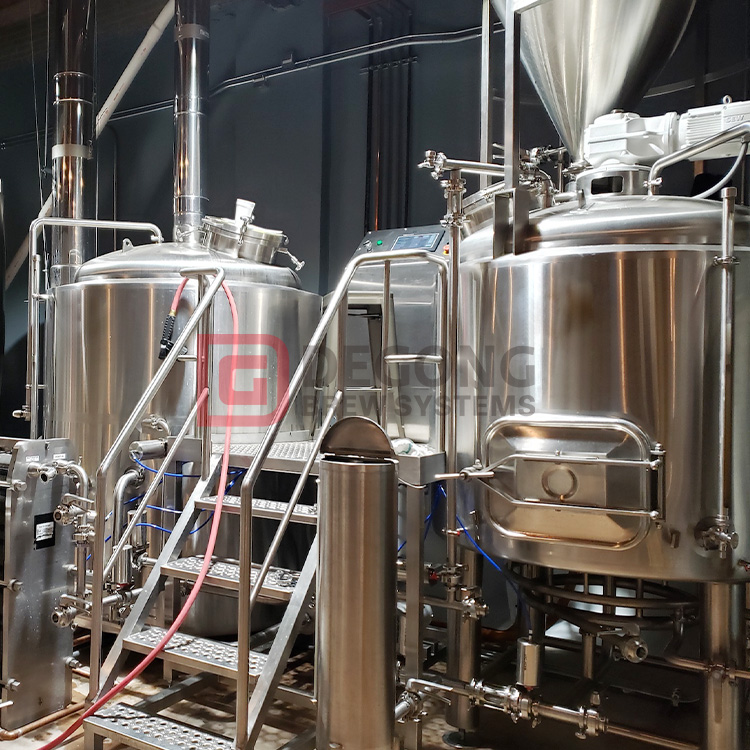
Modern kombucha brewing systems are revolutionizing beverage production through automation, hygiene, and consistency. Stainless-steel fermenters, precise temperature control, and continuous fermentation enable producers to scale safely and efficiently.
With DEGONG’s kombucha brewing solutions, you can move confidently from small-batch experimentation to full-scale commercial success — achieving superior quality, efficiency, and profitability.
If you’d like to learn more about our equipment specifications, layout design, or customized kombucha solutions, contact DEGONG today.