
 English
Views: 31 Author: Site Editor Publish Time: 2025-10-10 Origin: Site
Tank: The main body of the fermentation tank, typically constructed of 304 or 316 stainless steel, offering excellent corrosion and oxidation resistance.
Lid: This seals the top of the fermentation tank and is typically designed with a gas vent (such as a vent valve) to ensure the effective release of gases generated during fermentation.
Stirring System: Some stainless steel fermenters are equipped with a stirring system to ensure uniformity of the fermentation liquid and promote the distribution of nutrients during fermentation.
Temperature Control System: To maintain ideal temperature conditions during fermentation, stainless steel fermenters are typically equipped with temperature control equipment such as external heating pipes and cooling jackets.
Monitoring Instruments: These include pressure gauges and thermometers, used to monitor the temperature and pressure inside the fermentation tank to ensure the stability of the fermentation process.
Discharge System: This includes discharge piping and liquid outlets, used to remove byproducts such as gases and liquids generated during the fermentation process to prevent accumulation and affect the fermentation process.
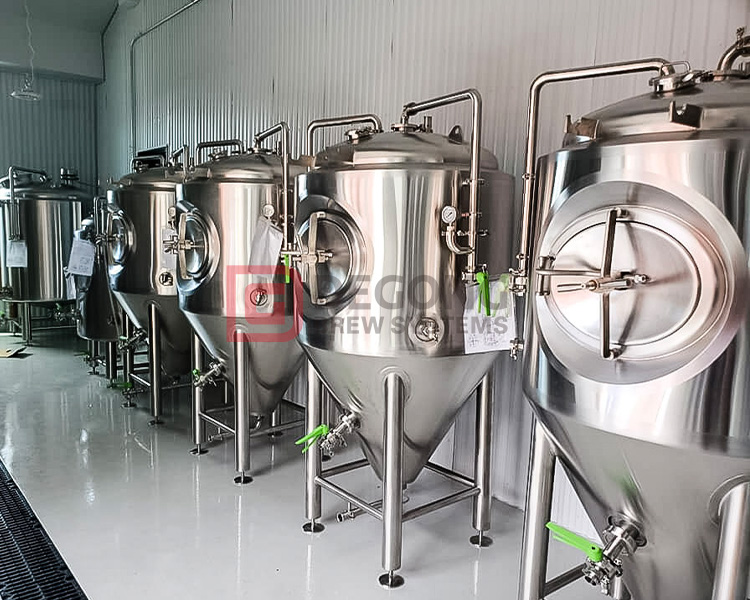
In the beer brewing process, yeast fermentation is a key step in the production of alcohol and fermentation. Traditionally, beer brewing has mostly been done in wooden or glass containers. However, with technological advancements and stringent quality requirements, more and more breweries are turning to stainless steel fermentation tanks. Their excellent corrosion and oxidation resistance ensures a stable fermentation process, prevents the penetration of harmful substances, and maintains a clean, smooth beer. Modern stainless steel fermentation tanks feature temperature control systems, automatic stirring systems, and advanced monitoring equipment, further improving brewing efficiency and product consistency.
The wine fermentation process, similar to beer brewing, also requires fermentation in a fermentation tank. Stainless steel fermentation tanks not only avoid the effects of wood and other materials, but also provide a closed, controlled fermentation environment. They maintain excellent temperature control, effectively preventing temperature fluctuations from disrupting the fermentation process. Furthermore, gases generated during wine fermentation need to be promptly discharged. Modern fermentation tanks are often equipped with gas exhaust devices to ensure a smooth fermentation process.
The production of dairy products such as yogurt and cheese also follows a fermentation process. Similar to beer and wine, dairy fermentation requires strictly controlled temperature and humidity conditions. Stainless steel fermentation tanks play a crucial role in this process. Their excellent thermal properties ensure a stable fermentation temperature, preventing fermentation failures caused by temperature fluctuations. Furthermore, the smooth surface of stainless steel is less susceptible to bacterial growth, meeting food production hygiene standards.

Many production processes in the pharmaceutical and chemical industries require stainless steel fermentation technology to produce biological products such as antibiotics, vaccines, and enzymes. To ensure product quality and process stability, companies often use stainless steel fermentation tanks for large-scale fermentation. These industries place extremely high demands on equipment cleanliness, corrosion resistance, and high-pressure resistance, and stainless steel accessories fully meet these requirements.
Excellent Corrosion Resistance: Effectively resists corrosion from acids, alkalis, and salts, making it particularly suitable for the acidic environments of beer brewing and wine fermentation, significantly extending equipment life.
Excellent High-Temperature Stability: Operates stably in high-temperature environments without deformation or damage due to temperature fluctuations. Its excellent thermal fermentation performance facilitates temperature control during the fermentation process.
Easy to Clean and Maintain: The smooth surface resists bacterial accumulation and can be thoroughly cleaned using high-temperature steam and chemical cleaning agents, ensuring fermentation liquid quality and product safety.
Excellent Sealing: The design offers excellent sealing, effectively preventing foreign matter from entering the fermentation liquid, improving fermentation efficiency and preventing unnecessary gas loss.
Strong Pressure Tolerance: Capable of withstanding high pressures in some specialized fermentation processes, preventing safety hazards caused by increased gas production.
Wide Applicability: Suitable not only for beer brewing and wine fermentation, but also for dairy fermentation and the pharmaceutical and chemical industries, operating stably in a variety of environments.

Before use, carefully inspect the tank, valves, temperature control system, agitator, and gas exhaust system to ensure there are no obvious damage, leaks, or abnormalities. Regularly inspect tank defects and welds to prevent equipment failure due to wear and corrosion. Fermentation tanks used in high-temperature or high-pressure environments require special attention to seals and pressure control systems.
Sensors, pressure gauges, temperature control devices, etc. require regular adjustment and inspection to ensure accuracy and reliability. The lubrication system also requires regular maintenance to reduce wear on mechanical components and extend equipment life. In particular, the agitator system requires the motor and transmission to be checked for proper operation to ensure uniform mixing.

After each fermentation, thoroughly clean the interior of the tank to prevent any residual fermentation products. Use tools suitable for stainless steel to avoid scratching the tank with hard objects and ensure that no residue remains. Disinfection is essential; high-temperature steam sterilization effectively kills microorganisms and ensures equipment hygiene.
In the event of a malfunction, immediately stop operation, inspect the faulty component, and repair it promptly. Record detailed information about each malfunction to provide data support for future maintenance and reduce the likelihood of similar issues.
