 English
Views: 31 Author: Site Editor Publish Time: 2025-12-05 Origin: Site
Setting up a brewery involves more than choosing recipes and ingredients. The quality, efficiency, and long-term stability of beer production depend heavily on the brewing equipment and how it is installed. In this guide, DEGONG, a professional manufacturer of stainless-steel brewing systems, provides a clear and structured overview of the essential components of a brewery and the key considerations for proper installation.

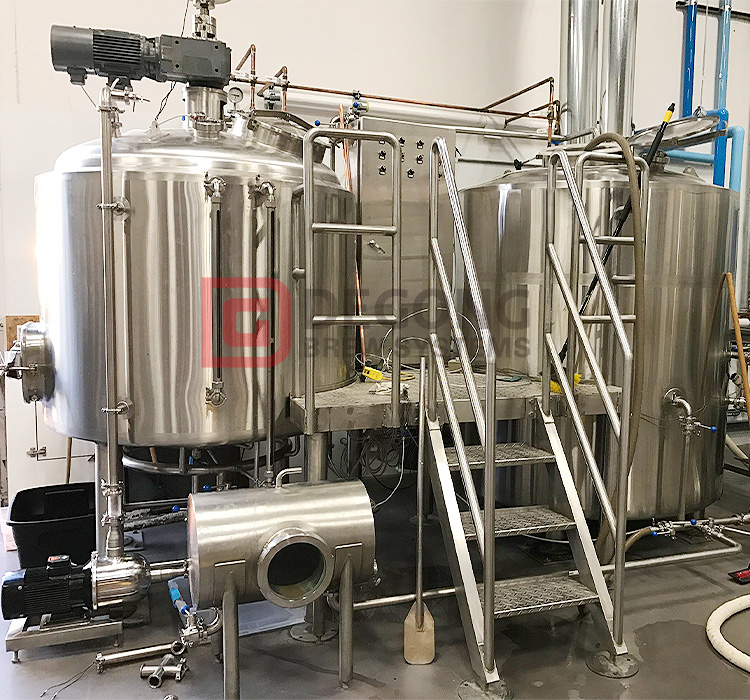
A complete brewing system typically includes the following equipment units, each playing an important role in the beer-making process.
Malt Mill
Used for crushing malt into grist. Proper milling improves mash efficiency and ensures smooth lautering.
Mash Tun
Where crushed malt is mixed with hot water. Enzymes in the grain convert starches into fermentable sugars.
Lauter Tun
Separates sweet wort from spent grain. A false bottom or wedge-wire screen ensures effective filtration.
Boil Kettle & Whirlpool
Wort is boiled, sterilized, and hops are added for bitterness, aroma, and flavor. After boiling, the whirlpool process helps remove solids and clarify the wort.
Heat Exchanger
A plate heat exchanger rapidly cools hot wort to fermentation temperature while maintaining sanitary conditions.
Fermentation Tanks / Unitanks
Yeast transforms wort into beer. DEGONG stainless-steel unitanks allow primary fermentation, conditioning, carbonation, and cold-crashing in a single vessel.
Glycol Cooling System
Provides precise temperature control for each tank through cooling jackets and automated temperature sensors.
Brite Tanks / Storage Tanks
Used for maturation, carbonation, clarification, and final beer polishing before packaging.
Packaging Equipment
Includes keg fillers, bottling machines, and canning lines depending on the brewery’s production scale.
CIP (Clean-in-Place) System
Automated CIP spray balls and sanitary pipework ensure fast, safe, and consistent cleaning of tanks and pipelines.

A modern brewery typically follows this sequence:
Milling – Malt is crushed in the mill.
Mashing – Grain and water are mixed and heated in the mash tun.
Lautering – Wort is separated from grain in the lauter tun.
Boiling – Wort is boiled and hops are added.
Whirlpool – Solids settle and wort clarifies.
Cooling – Plate heat exchanger cools wort to fermentation temperature.
Fermentation – Wort is transferred to DEGONG fermentation tanks for yeast activity.
Conditioning – Beer matures, carbonates, and clarifies in unitanks or brite tanks.
Packaging – Finished beer is filled into bottles, cans, or kegs.
CIP Cleaning – Tanks and pipelines are cleaned for the next batch.
This structured flow ensures stable beer quality and maintains hygiene throughout the production cycle.

Proper installation is essential for safety, efficiency, and long-term performance.
Layout Planning
Arrange equipment logically according to the brewing flow to minimize unnecessary piping and reduce contamination risk.
Electrical & Steam Requirements
Ensure compatibility with the brewhouse heating method (electric, steam, or gas) and meet local electrical and safety standards.
Glycol System Integration
DEGONG recommends using insulated glycol piping, high-efficiency chillers, and precise temperature controllers to maintain stable fermentation.
Sanitary Connections
Use food-grade stainless-steel fittings (tri-clamp connections), polished welds, and hygienic valves to prevent contamination and simplify cleaning.
CIP Design Considerations
Install CIP ports, spray balls, and dedicated cleaning pipelines so tanks can be cleaned without disassembly.
Future Expansion
When planning the brewhouse layout, reserve space for additional fermentation tanks, larger chillers, or automation upgrades.

Stable beer quality requires consistent maintenance:
Regularly inspect valves, gaskets, pumps, and pipelines.
Clean all tanks after each batch using CIP cycles with caustic, hot water, and sanitizers.
Keep temperature and pressure control systems calibrated.
Maintain glycol concentration and check for leaks.
Record process parameters to ensure consistent brewing performance.
DEGONG systems are designed with easy-access ports, polished interiors, and hygienic piping to simplify cleaning and reduce downtime.
A well-designed brewing system and a properly planned installation are the foundations of consistent, high-quality beer production. By understanding each equipment component and following structured installation practices, breweries can improve efficiency, maintain hygiene, and ensure long-term reliability.
DEGONG offers fully customized brewhouse solutions, fermentation systems, and turnkey brewery installations to support breweries of all sizes. Whether you are building a new craft brewery or expanding production, choosing professional equipment and proper installation will ensure successful brewing operations for years to come.