
 English
Views: 33 Author: Site Editor Publish Time: 2025-12-17 Origin: Site
Beer fermentation is the most critical stage in the brewing process. It is during fermentation that yeast converts fermentable sugars into alcohol, carbon dioxide, and flavor compounds. Even when the wort is well prepared, fermentation can still fail due to poor control, unhealthy yeast, or equipment and process issues.
At DEGONG, we work closely with breweries of all sizes and have identified the most common reasons why beer fermentation fails — along with proven solutions to prevent these problems and improve consistency.
Fermentation may fail to start, progress slowly, or stop prematurely when yeast is weak, stressed, or under-pitched.
Old or improperly stored yeast
Insufficient yeast quantity for wort gravity and batch size
Lack of yeast nutrients
Use fresh yeast strains suitable for the beer style
Pitch the correct amount of yeast based on original gravity
Add yeast nutrients when necessary to support healthy growth
Healthy yeast is the foundation of reliable fermentation.

Temperature outside the yeast’s optimal range can cause sluggish fermentation, stalled activity, or off-flavors such as fusel alcohols and esters.
Uncontrolled ambient temperatures
Inadequate cooling or heating systems
Sudden temperature fluctuations
Maintain fermentation temperatures specific to the yeast strain
Use jacketed fermenters with glycol cooling for precise control
Avoid rapid temperature changes during active fermentation
DEGONG fermenters are designed to provide stable and uniform temperature control throughout the process.
Incorrect fermenter volume or poor tank geometry can negatively affect yeast performance and pressure management.
Insufficient headspace for foam and CO₂
Flat-bottom tanks that limit yeast collection
Poor internal surface finish
Use conical fermenters with proper headspace
Match fermenter size to batch volume
Ensure smooth internal surfaces for sanitation and yeast health
Well-designed fermentation tanks improve both process efficiency and beer quality.
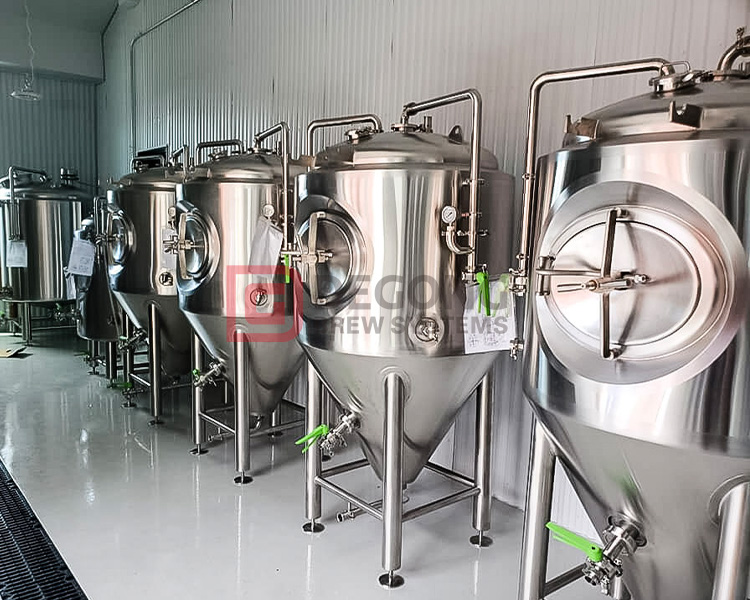
Wild yeast and bacteria can infect beer during fermentation, leading to sour flavors, haze, or complete batch loss.
Incomplete cleaning of tanks, hoses, or valves
Cross-contamination during transfers
Ineffective CIP procedures
Follow strict cleaning and sanitation protocols
Use automated CIP systems for consistent results
Inspect seals, gaskets, and valves regularly
Reliable sanitation is essential for stable fermentation.
Yeast requires oxygen before fermentation starts, but excess oxygen after pitching can cause oxidation and flavor instability.
Insufficient wort aeration before pitching
Oxygen ingress during transfers or sampling
Aerate wort adequately before adding yeast
Minimize oxygen exposure after fermentation begins
Use closed transfer systems where possible
Controlled oxygen management supports healthy yeast metabolism.

Wort lacking fermentable sugars limits yeast activity, resulting in low alcohol content and weak fermentation.
Incorrect mash temperature
Incomplete starch conversion
Inconsistent brewhouse operation
Monitor mash temperature closely
Use reliable brewhouse equipment for consistent extraction
Verify wort gravity before fermentation
High-quality wort leads to predictable fermentation results.
Fermentation may slow down or stop entirely before reaching the target final gravity.
Yeast stress
Nutrient deficiency
High alcohol concentration
Temperature shock
Gently raise fermentation temperature if needed
Add fresh, active yeast when necessary
Avoid sudden environmental changes
Early intervention can often rescue a stalled fermentation.

Common off-flavors include buttery notes, sulfur aromas, solvent-like alcohols, and oxidation.
Incomplete fermentation
Poor temperature control
Oxygen exposure
Insufficient conditioning time
Allow adequate fermentation and conditioning time
Perform temperature-controlled diacetyl rests
Protect beer from oxygen during and after fermentation
Consistent process control minimizes flavor defects.
Successful beer fermentation depends on healthy yeast, precise temperature control, proper sanitation, and well-designed equipment. By understanding common fermentation failures and applying proven solutions, brewers can significantly improve beer quality and production consistency.
DEGONG provides fermentation tanks, cooling systems, and brewery solutions designed to support stable, efficient, and repeatable fermentation — helping brewers reduce risk and produce better beer batch after batch.
