
 English
Views: 27 Author: Site Editor Publish Time: 2025-07-30 Origin: Site
There are various methods for adding hops during the brewing process. Dry hopping refers to the addition of hops at a specific point after fermentation has begun. Adding hops can impart a fresh hop aroma to the beer without increasing bitterness. It can also contribute a unique flavor profile.
Dry hopping refers to the process of adding hops as a cold addition. It is typically added during primary fermentation or immediately after primary fermentation. Dry hopping can enhance the aroma and flavor of beer without increasing bitterness.
Hops contain compounds called alpha acids. When alpha acids are heated during the boiling process, they undergo isomerization. Isomerized alpha acids impart the bitterness of hops to beer. Dry hopping preserves the delicate volatile oils that contribute to flavor and aroma, giving the beer a satisfying aroma.

The best time to add hops to the fermentation tank is when fermentation begins to slow down. This is usually indicated by the foam (or Kraus foam) beginning to subside, which typically occurs at the same time as a reduction in bubbles in the airlock. This usually happens around three to four days after fermentation begins. If using a single-stage fermentation tank, add the hops directly. If using a secondary fermentation tank, immediately transfer the beer back into the tank and add the dry hops to the secondary fermentation tank.
The incorrect time to add hops is at the start of fermentation or shortly thereafter. Hops are not sterile products, and adding them too early may lead to beer contamination.

The method of dry hopping depends on the type of hops used and their placement. There are some key differences between using hops pellets and whole hops for dry hopping. Hops pellets float on the surface of the water and then sink to the bottom.
When using hop pellets, nearly all the hop oils are released into the beer almost immediately. If using whole hops, it may take one to two weeks for a significant amount of oil to be released.
This method of dry hopping is not ideal, but it can be used to determine which aromatic compounds pair well with a particular type of beer. If you are brewing a pale ale, try dry hopping next time. Place some pale ale and some grain hops in a French press and let them steep for a while.
This is an excellent variation of dry hopping. Before adding the hops to the barrel, place them in a hop bag or tea strainer. This method imparts a unique aroma to the hops, and since the tea strainer is positioned near the beer's tap, some beer flows directly through the bag into the glass, resulting in a very fresh taste.
Most home brewers react less strongly to initial dry hopping than to secondary dry hopping. In theory, initial dry hopping allows carbon dioxide bubbles to carry away the aromatic compounds in beer. However, although initial dry hopping does change the aromatic characteristics, the exact mechanism is still unclear.
The aromatic compounds in hops are present in hop oils, and these oils are not volatile enough to be carried away by carbon dioxide bubbles. The only reason they dissipate during boiling is that they are evaporated by the boiling process. This process has been attempted several times in both homebrewing and commercial brewing, but it has not yet been widely adopted.

Bittering hops are added when the wort is collected in the boiling kettle (or after malt extract is added) and begins to boil. This process typically lasts 60 minutes, but some recipes require 30 minutes. All beers contain a certain amount of bittering hops. The main reason is that without the bitterness of hops, beer would taste sweet and syrupy. Another benefit is that hops act as a natural preservative, helping to extend the shelf life or aging time of beer.
Flavor hops are typically added after boiling, usually between 15 and 30 minutes. During this time, the bitterness from the hops is slightly extracted, but it imparts a fresh hop flavor to the beer. Similarly, these hops are the same as bittering hops or aroma hops, with the difference being the boiling time.
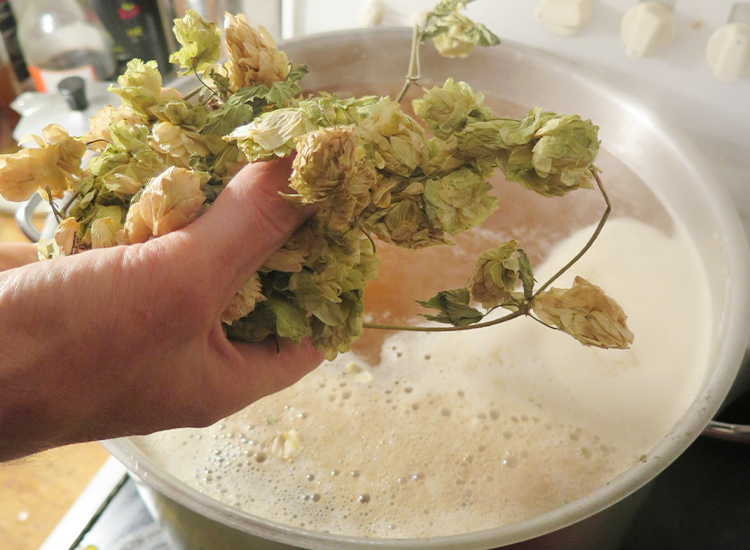
The aromatic oils contained in aromatic hops are volatile and will quickly dissipate in boiling steam. Therefore, aromatic hops should not be boiled for long periods of time. They are typically added during the last 5 minutes of boiling or when the heat is turned off. Adding hops after turning off the heat maximizes the retention of aroma.