
 English
Views: 25 Author: Site Editor Publish Time: 2025-09-02 Origin: Site
A steam jacket heats the vessel walls, which then transfers heat to the liquid inside.
This method maximizes liquid contact surface area and provides high energy transfer efficiency.
✔ Fastest heating method for large brewery construction
✔ Fast boiling time
✔ Good heating efficiency when combined with a gas boiler
✔ Easier to clean than electric heating
✔ Provides uniform heating and precise temperature control
✖ Requires construction of a boiler system and steam system, making it the most expensive heating method
✖ Generally not cost-effective for small brewery equipment
✖ Requires local government inspection and operating permits in some countries

Home breweries and small commercial breweries (5-10 BBL)
A powerful gas burner is mounted outside the kettle.
The flame is projected onto a baffle or diffuser that encloses the combustion chamber at the bottom of the kettle.
✔ Space-saving
✔ Lowest initial startup cost for craft breweries
✔ Some brewers prefer the caramelized effect this system produces
✖ Gas heating is typically only 25%-50% efficient, making it potentially the most expensive heating method
✖ Heats away quickly
✖ Requires a fire suppression system
✖ Construction and installation restrictions
✖ Difficult to clean
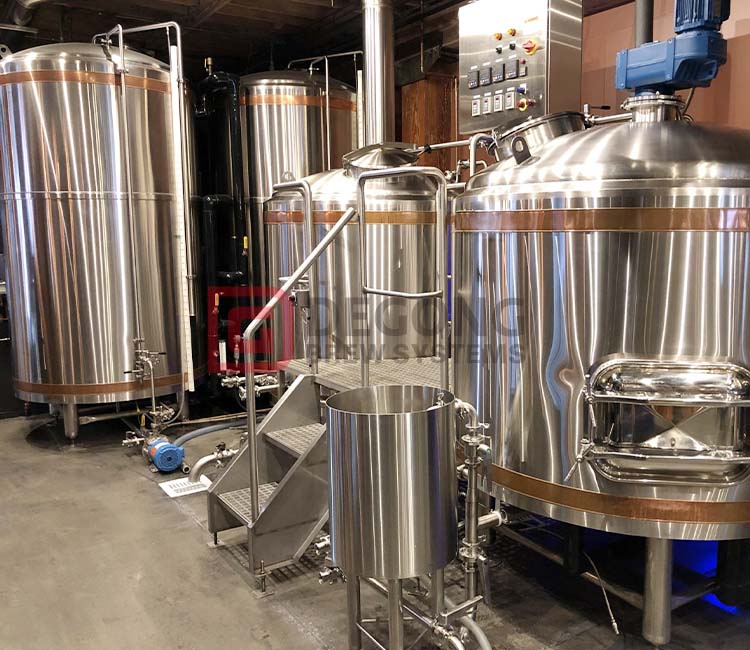
Small commercial brewing systems (200L-1000L)
Uses electric heating elements.
Heating tubes are placed inside the brewer to ensure maximum heating efficiency.
✔ Efficient heating method for small brewery equipment
✔ Cost-effective for breweries with a capacity of 200L-1000L
✔ Excellent temperature control during brewing
✔ Predictable costs
✔ 100% conversion of electrical energy into heat
✖ Costs are typically higher than steam heating
✖ Initial equipment cost is higher than direct flame heating
✖ Heating is very slow, which can extend brewing time
✖ Electrical components require disassembly for cleaning after brewing

Highest energy conversion rate (100%)
More cost-effective than steam and gas heating
No concerns about carbon monoxide, open flames, or explosive gases
However, it requires a significant power supply
Can produce ideal caramelization using a gas system
Avoids the high investment of a steam generator
Solve the on-site power supply issues of electric brewing equipment
However, it has the lowest energy conversion rate (20-50%)
Optimal process and quality control, especially during the mashing phase (heating, holding, etc.)
Direct flame heating with steam generators is recommended for higher energy efficiency and lower costs

For large commercial breweries, steam jacket heating is often preferred due to its heating efficiency and controllability. Electric heating is popular in smaller units due to its heating capacity. Regardless of the method chosen, it is important to follow safety guidelines and monitor the heating process to avoid burning or other problems that could affect beer quality.
