
 English
Views: 23 Author: Site Editor Publish Time: 2025-11-19 Origin: Site
A mash tun is a foundational piece of equipment in any brewing setup—whether homebrewing or commercial production. It’s where crushed grains and hot water combine, enzymes convert starch into sugars, and the character of the beer truly begins. A well-designed mash tun provides stable temperature control, efficient lautering, and consistent wort quality. A poor design, on the other hand, can cause stuck mash, heat loss, and low extraction efficiency.
A mash tun is a vessel designed for the mashing process—mixing milled malted grains with hot water to activate enzymes that break down starches into fermentable sugars.
Its key purposes include:
Maintaining a stable mash temperature
Allowing proper circulation and filtration
Supporting lautering and sparging
Providing consistent extract efficiency
The design and construction of your mash tun significantly impact your brewing results, clarity of wort, and flavor development.
Understanding the mash process helps you optimize performance:
Step 1: Strike Water & Dough-In
Hot water (“strike water”) is mixed with crushed malt to reach a target temperature—typically 148–156°F (64–69°C). This temperature determines the body, fermentability, and profile of the beer.
Step 2: Enzymatic Conversion
During the rest period, enzymes convert starch into sugars. Maintaining temperature stability is crucial for predictable results.
Step 3: Recirculation (Vorlauf)
Wort is gently recirculated to clarify it, improving clarity and preventing grain particles from transferring during lautering.
Step 4: Lautering & Sparging
Wort is drained from the tun through the grain bed, which acts as a natural filter. Sparging rinses remaining sugars from the grains with hot water.
Step 5: Runoff to the Boil Kettle
Clean wort flows into the boil kettle for the next stage of the brewing process.
DEGONG Tip: A properly designed false bottom or manifold ensures smooth runoff and prevents stuck mash.
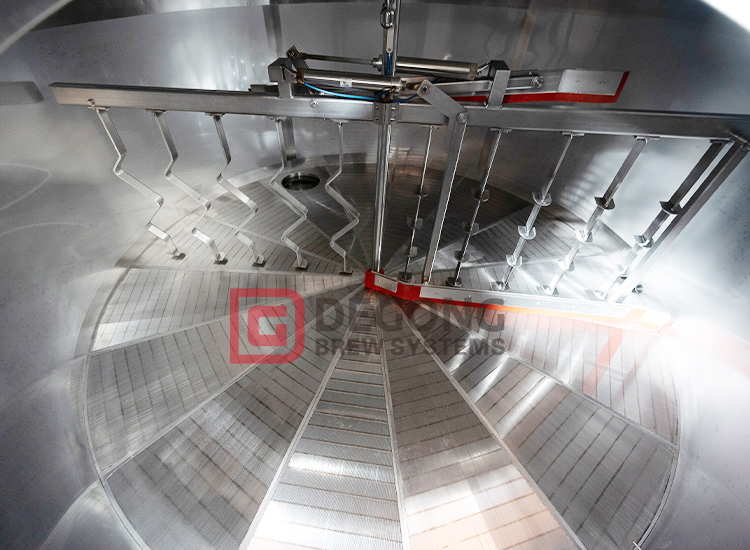
Mash tuns come in different forms depending on scale, heating method, and budget.
(1) Cooler Mash Tuns (For Home & Hobby Brewing)
Insulated plastic coolers modified with false bottoms or screens
Excellent heat retention
Affordable DIY option
Limited for large-scale brewing
(2) Stainless-Steel Mash Tuns
DEGONG’s stainless-steel mash tuns are favored by craft breweries due to durability and consistency. Features typically include:
False bottom or wedge-wire screen
Tri-clamp fittings
Precision valves
Recirculation ports
Easy cleaning and sanitation
(3) Electric or Steam-Jacketed Mash Tuns
Best for professional brewing, these systems allow:
Tight temperature control
Multi-step mashing
Automated recirculation
High repeatability
(4) HERMS & RIMS Mash Systems
Used for advanced temperature control:
HERMS uses a heat exchanger coil
RIMS uses a recirculated heating element
DEGONG Recommendation: Choose the type based on batch size, automation needs, and desired level of temperature precision.
✔ False Bottom / Manifold
Prevents grain from clogging the outlet and ensures even filtration.
✔ Full-Port Valve
Allows smooth wort flow without restrictions.
✔ Adequate Headspace
Prevents spillover during stirring or recirculation.
✔ Proper Diameter-to-Height Ratio
A wider tun offers a shallower grain bed—improving lautering performance.
✔ Thermometer Ports & Recirculation Fittings
Enable precise monitoring and gentle wort circulation.
✔ Smooth Internal Surfaces
Ensure better sanitation and easier cleaning.

Maintaining a stable mash temperature is essential. Heat loss can negatively affect conversion efficiency and alter beer profile.
Common Insulation Methods
Foam insulation wrap
Stainless-steel jacket with insulation
Thermal blankets
Multi-layer insulated wall construction
Benefits of Proper Insulation
More stable mash temperature
Reduced energy consumption
Fewer temperature corrections
More consistent beer results
DEGONG Tip: Even in manually heated systems, a well-insulated mash tun ensures predictability batch after batch.
Direct-Fire Mash Tuns
Heated with gas burners
Require careful mixing to avoid scorching
Steam-Jacketed Mash Tuns
Provide uniform heat
Ideal for multi-step mashes
Standard in DEGONG commercial brewhouses
Electric Mash Tuns
Clean, efficient heating
Excellent for pilot systems
Professional Note: Automated temperature control (PLC + sensors) significantly improves consistency.
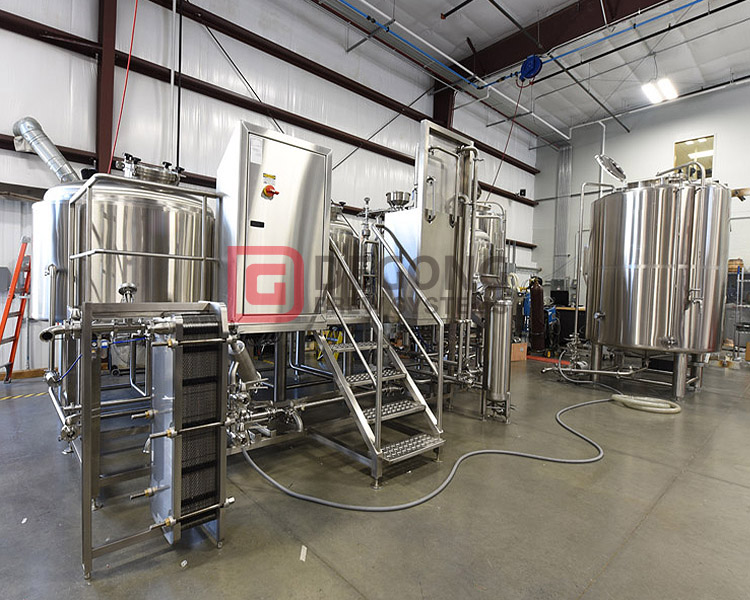
False bottom
Stainless braided hose manifold
Ball valve
Excellent entry-level system
Full-port valve
Temperature gauge
Optional recirculation
Mid-level upgrade
Steam/electric heating
Automated rakes
Vorlauf system
Jacketed walls
Insulation layer
CIP cleaning ports
Sight glasses/inspection ports
Precision lautering screens
Cooler Mash Tun
Pros: inexpensive, good insulation
Cons: limited for large scale, plastic wears over time
Stainless Steel Mash Tun
Pros: durable, sanitary, scalable, professional appearance
Cons: higher cost
Electric/Steam Mash Tun
Pros: superior control, ideal for advanced brewing
Cons: electrical/steam requirements
HERMS/RIMS Systems
Pros: very consistent temperature profiles
Cons: more complex setups

Preheat the mash tun before dough-in
Stir thoroughly to prevent dry pockets
Avoid overly fine grain crush
Maintain proper water-to-grain ratio
Don’t rush lautering—let the grain bed settle
Recirculate until wort is clear
Keep sparge water around 168–170°F
Insulate the lid, not just the walls
Monitor temperature in multiple areas of the mash
DEGONG Tip: Stable temperature = stable beer. Protect the mash temperature at all costs.
Stuck Mash
Cause: too fine crush, poor false bottom, too deep grain bed
Fix: add rice hulls, stir gently, improve screen design
Heat Loss
Cause: inadequate insulation
Fix: wrap tun, insulate lid, use recirculation
Low Efficiency
Cause: fast sparge, uneven bed, temperature swings
Fix: slow the runoff, control temp, improve crush consistency
Scorching (Direct Fire)
Cause: insufficient mixing
Fix: constant agitation or switch to jacketed heating
